
Wheel Alignment in Fremont, CA
Fremont Alignment provides professional four-wheel alignment using Hunter HawkEye Elite computerized alignment technology. We serve cars, trucks, SUVs and EVs — including Tesla wheel alignment in Fremont.
CALL (510) 304-0890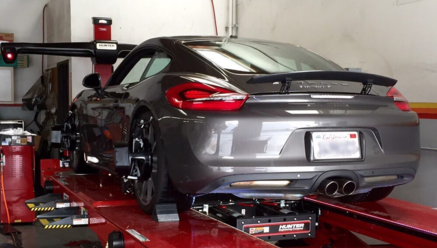
Wheel Alignment Specialists — Fremont, CA
Unlike general automotive repair shops that offer alignment as one of many services, wheel alignment is the focus of our business. Our experienced alignment technicians work with passenger cars, SUVs, pickup trucks, Tesla vehicles, EVs, and many domestic, Asian and European vehicles.
Most standard wheel alignments take approximately 30 minutes when the vehicle is in alignable condition.
What Is Wheel Alignment?
Wheel alignment is the process of measuring and adjusting the suspension angles that determine how your wheels and tires contact the road. An alignment does not change the physical shape of the wheels or tires. Instead, it corrects the direction and angle at which the wheels travel.
Proper wheel alignment helps the vehicle track straight, keeps the steering wheel centered, improves handling and helps the tires wear more evenly. When alignment angles are outside the vehicle manufacturer's specifications, the vehicle may pull, wander or feel unstable, and the tires may develop premature or uneven wear.
Modern vehicles use several alignment measurements. The most important are toe, camber, caster and thrust angle. Fremont Alignment measures these angles using Hunter HawkEye Elite alignment equipment.
Toe: The Direction the Tires Point
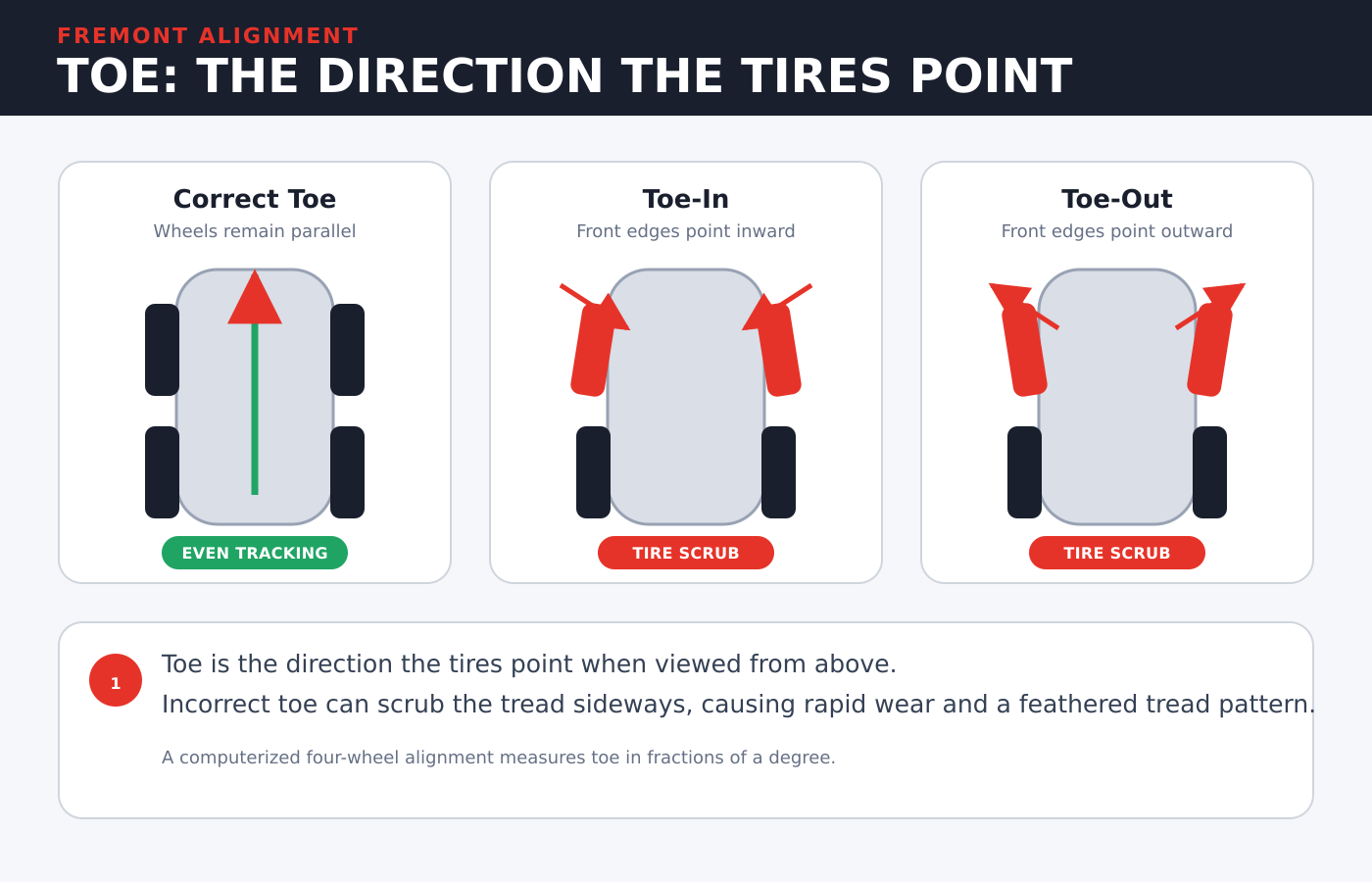
Toe describes the direction the tires point when viewed from above the vehicle.
If the fronts of the tires point toward each other, this is called toe-in. If they point away from each other, this is called toe-out. Even a small incorrect toe angle can cause the tires to scrub sideways against the pavement as the vehicle moves.
Incorrect toe is one of the most common causes of rapid tire wear. It can create a feathered or rough pattern across the tire tread and may also contribute to wandering, unstable steering or a steering wheel that is not centered.
During a wheel alignment, we measure the toe angle and adjust it toward the vehicle manufacturer's specifications whenever the vehicle allows the necessary adjustment.
Camber: The Inward or Outward Tilt
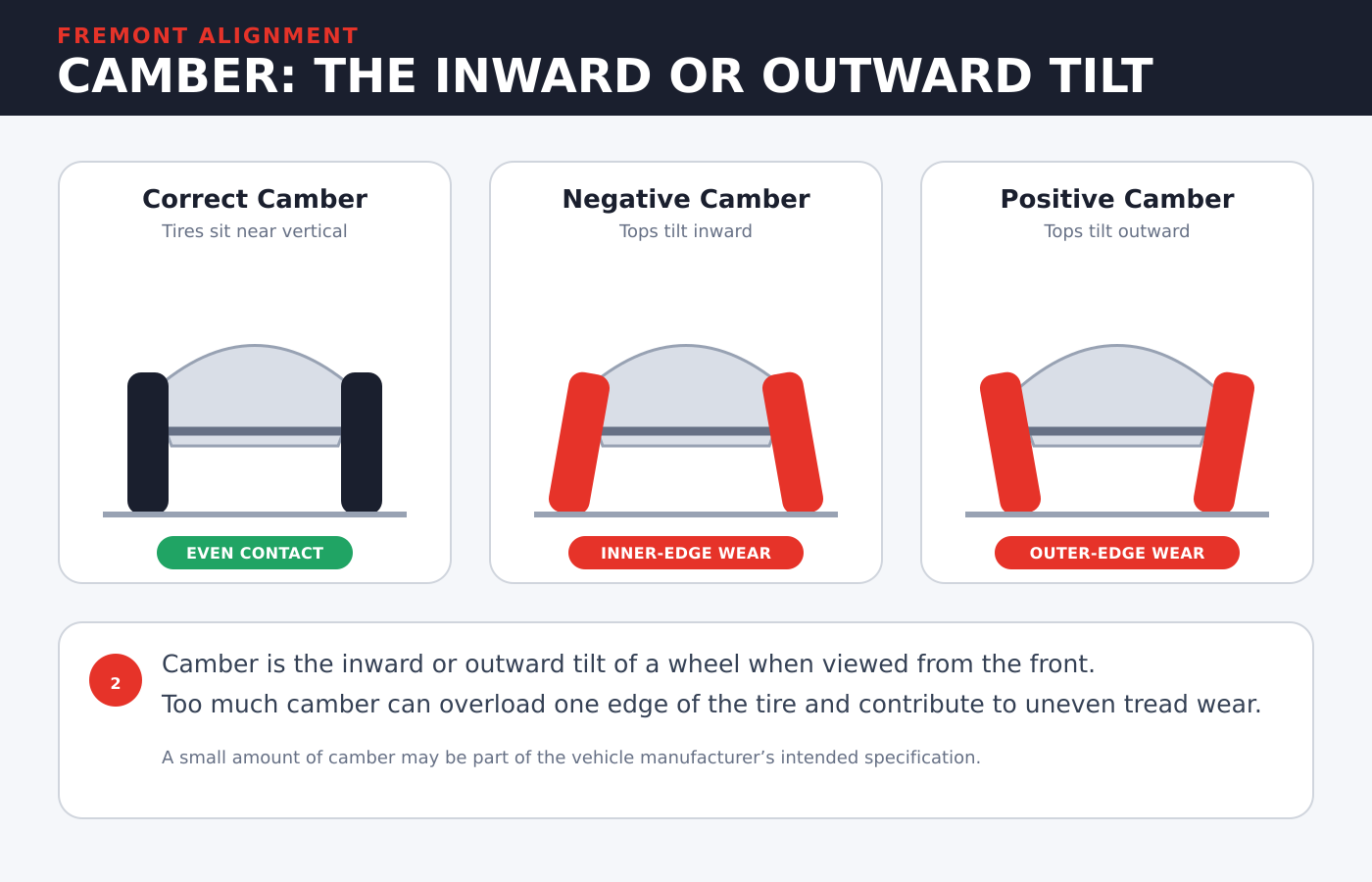
Camber is the inward or outward tilt of a wheel when viewed from the front of the vehicle.
Negative camber means the top of the tire leans inward. Excessive negative camber may wear the inside shoulder of the tire. Positive camber means the top of the tire leans outward and may cause wear on the outside shoulder.
A small amount of camber may be intentionally designed into a vehicle to improve handling and stability. The problem occurs when the camber is outside the manufacturer's specified range or is significantly different from one side of the vehicle to the other.
Incorrect camber can result from normal wear, pothole impacts, curb contact, collision damage, worn suspension components or modifications to the vehicle's ride height. Some vehicles provide factory camber adjustments, while others may require additional parts or suspension repairs before camber can be corrected.
Fremont Alignment performs alignment measurements and adjustments, but we do not replace suspension components. If worn or damaged parts prevent a proper alignment, we will explain what we find so the customer can have the necessary repair completed.
Caster: Steering Stability and Return
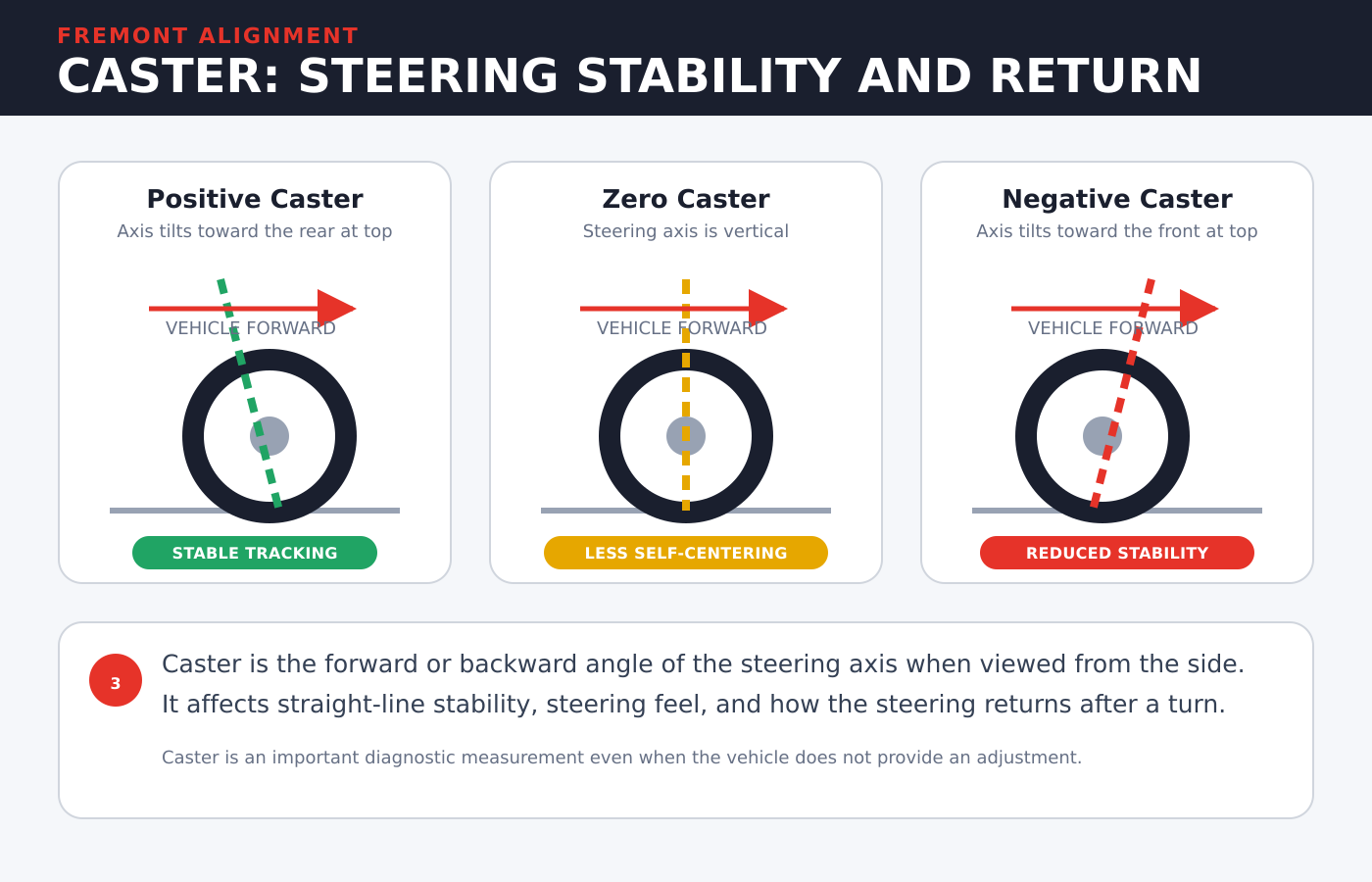
Caster is the forward or backward angle of the steering axis when viewed from the side of the vehicle. It is similar to the angle that helps the front wheel of a bicycle or shopping cart return to a straight position.
Proper caster improves straight-line stability, steering control and the steering wheel's ability to return toward the center after a turn. A large difference in caster between the left and right sides may contribute to the vehicle pulling to one side.
Caster usually does not cause tire wear by itself, but it can strongly affect steering feel and vehicle stability. On some vehicles caster is adjustable. On others, an incorrect caster measurement may indicate worn, bent, shifted or damaged suspension components.
Thrust Angle: How the Rear Wheels Track
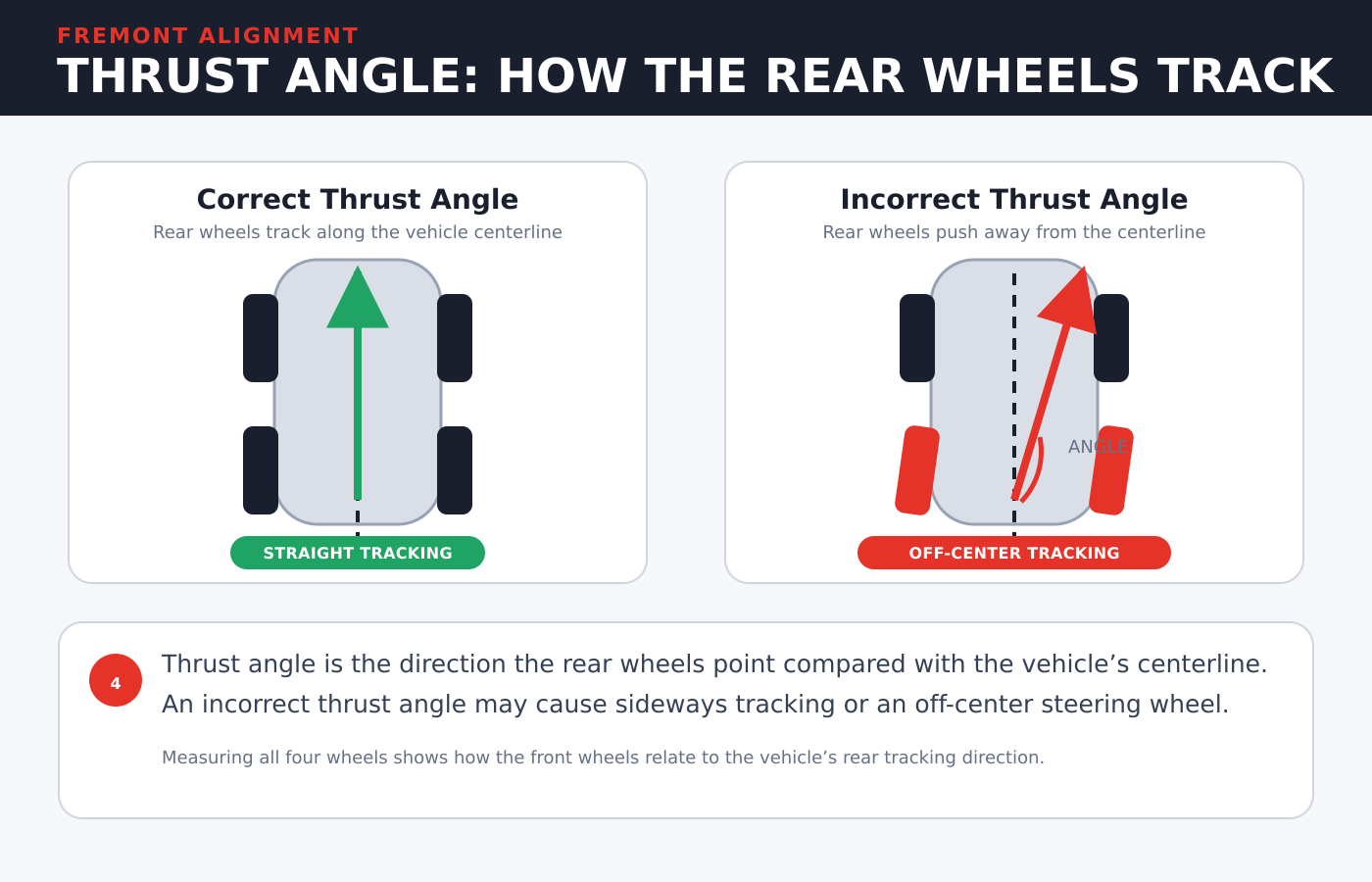
Thrust angle describes the direction the rear wheels are pointing compared with the vehicle's geometric centerline.
When the rear wheels point straight ahead, the thrust angle is centered and the front and rear wheels travel in the same direction. When the thrust angle is incorrect, the rear wheels may push the vehicle slightly to one side.
An incorrect thrust angle may contribute to an off-center steering wheel, unusual handling or a condition sometimes described as "dog tracking," where the rear of the vehicle does not appear to follow directly behind the front.
Measuring the thrust angle is an important reason to perform a four-wheel alignment instead of checking only the front wheels. The rear wheel measurements help establish the correct direction for centering and adjusting the front wheels.
Why Four-Wheel Alignment Matters
A four-wheel alignment measures the relationship between all four wheels. Our Hunter HawkEye Elite system checks front and rear toe, camber, caster where applicable, total toe, thrust angle and steering wheel position.
Even when a vehicle has limited rear adjustments, measuring the rear wheels is still important. Those measurements provide the reference needed to align the front wheels correctly and center the steering wheel in relation to the vehicle's actual direction of travel.
Signs Your Vehicle May Need a Wheel Alignment
Consider having the alignment inspected if you notice:
- The vehicle pulls or drifts to one side
- The steering wheel is crooked while driving straight
- The vehicle wanders or feels unstable
- Uneven wear on the inside or outside edges of the tires
- Feathered or rough tire tread
- A recent pothole or curb impact
- New tires were recently installed
- Suspension or steering work was performed
- The vehicle has been lowered, lifted or otherwise modified
- The vehicle was involved in a collision
Pulling is not always caused by wheel alignment. Tire pressure, tire construction, uneven tire wear, brake problems, worn suspension parts and the slope of the road can also affect how a vehicle tracks.
Wheel Alignment Is Not Wheel Balancing
Wheel alignment and wheel balancing solve different problems.
Alignment corrects the direction and suspension angles of the wheels. Balancing corrects an uneven distribution of weight within a tire-and-wheel assembly. An alignment problem is more likely to cause pulling, an off-center steering wheel or uneven tire wear. A balancing problem is more likely to cause vibration at certain speeds.
Fremont Alignment specializes in wheel alignment. We do not sell or replace tires, perform wheel balancing or replace suspension components.
Precision Wheel Alignment in Fremont, CA
Fremont Alignment is an alignment-focused shop serving drivers from Fremont, Newark, Union City, Milpitas and nearby communities. We use Hunter HawkEye Elite equipment to measure the vehicle's alignment angles and make precise adjustments based on the manufacturer's specifications.
Read our wheel alignment FAQs →
A standard alignment appointment can often be completed in approximately 30 minutes, although vehicle condition, modifications and adjustment requirements may affect completion time.
Schedule a Wheel AlignmentSchedule Your Wheel Alignment in Fremont
Call us for pricing and availability. Most standard alignments take approximately 30 minutes.
CALL (510) 304-0890